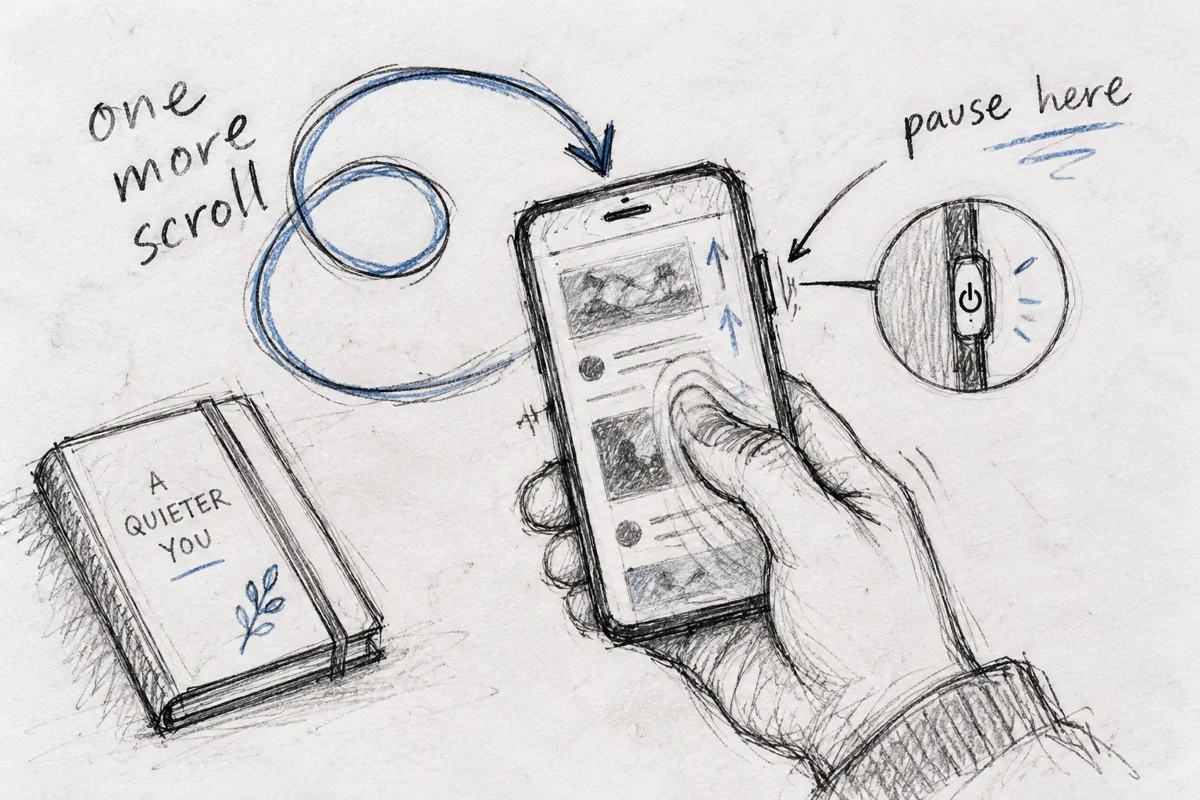
If you have ever found yourself staring at short video reels for hours only to feel mentally foggy, exhausted, and unable to concentrate on work, you are not alone. This state of mental fatigue is commonly called brain rot.
While it sounds like a casual internet phrase, the underlying mechanism is real. Constant micro-dopamine hits from 15-second videos overload your prefrontal cortex, making quiet and productive tasks feel impossibly boring.
How Short Form Video Changes Attention
Every time you swipe to a new video, your brain receives a small spike of dopamine. When the clip finishes, that level drops fast. Your mind naturally seeks the next hit, leading to an endless loop of scrolling.
Over time, this rapid switching damages your working memory and makes it hard to maintain continuous focus. You start feeling an urge to check your screen every time there is a quiet moment.
Three Steps to Rebuild Concentration
1. Take Short Daily Brain Breaks: Instead of checking feeds on your break, do 3 minutes of visual tracking or pattern memory training to activate your working memory actively.
2. Set Phone Boundaries: Keep your phone out of reach during deep work blocks. Giving your mind dedicated quiet time lets your attention span heal.
3. Use Controlled Breathing: Box breathing for two minutes lowers your heart rate and reduces stress hormones that contribute to brain fog.
Long-Term Brain Health Recovery
Rebuilding your focus does not happen overnight, but neuroplasticity allows your brain to adapt quickly. Within two weeks of daily structured exercises, your brain forms stronger pathways for sustained attention, allowing you to read, code, or study without constant distraction.