Words pull at your attention
Naming an ink color is slower when the word spells a different color. Color Match trains you to override that pull.
Brain training for Android
Short, science-informed exercises for focus, memory and calm. Levels and a daily streak turn five minutes into a habit.
Free to start. Levels 1 to 3 of every exercise are free.
Try it now
No download and no sign-up. Each one takes about a minute in your browser.
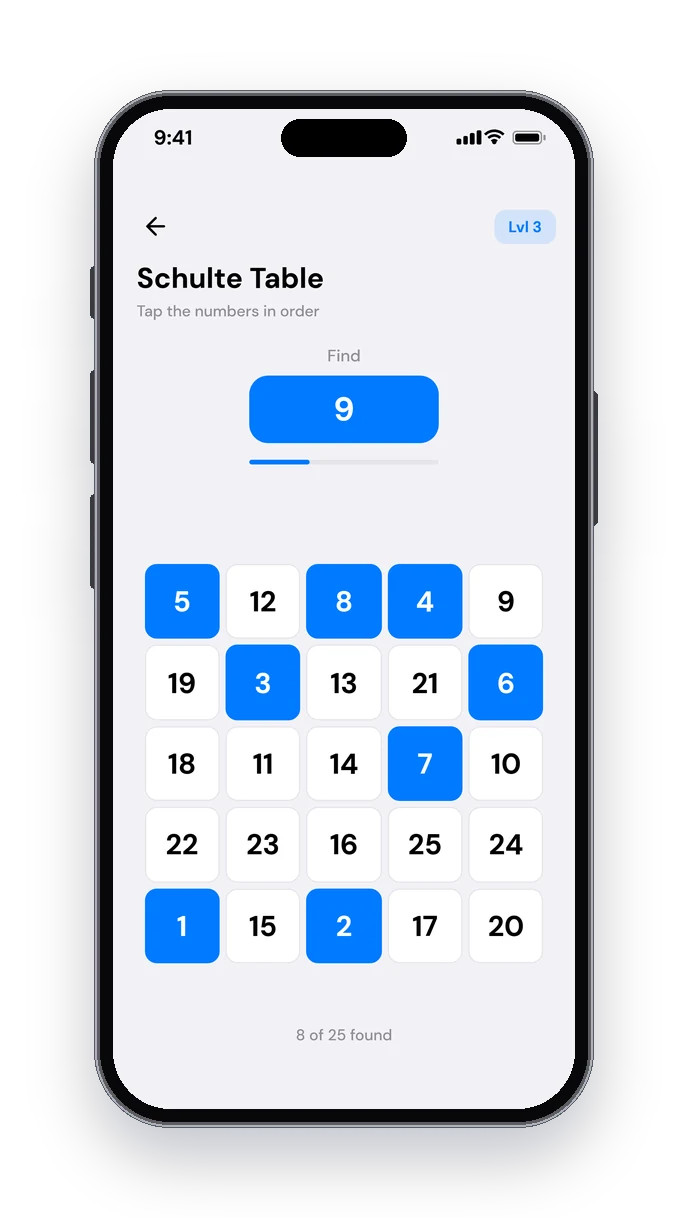
Find 1 to 16 in order, as fast as you can.
Play freeTap the ink color, not the word.
Play freeWatch the tiles light up, then repeat them in order.
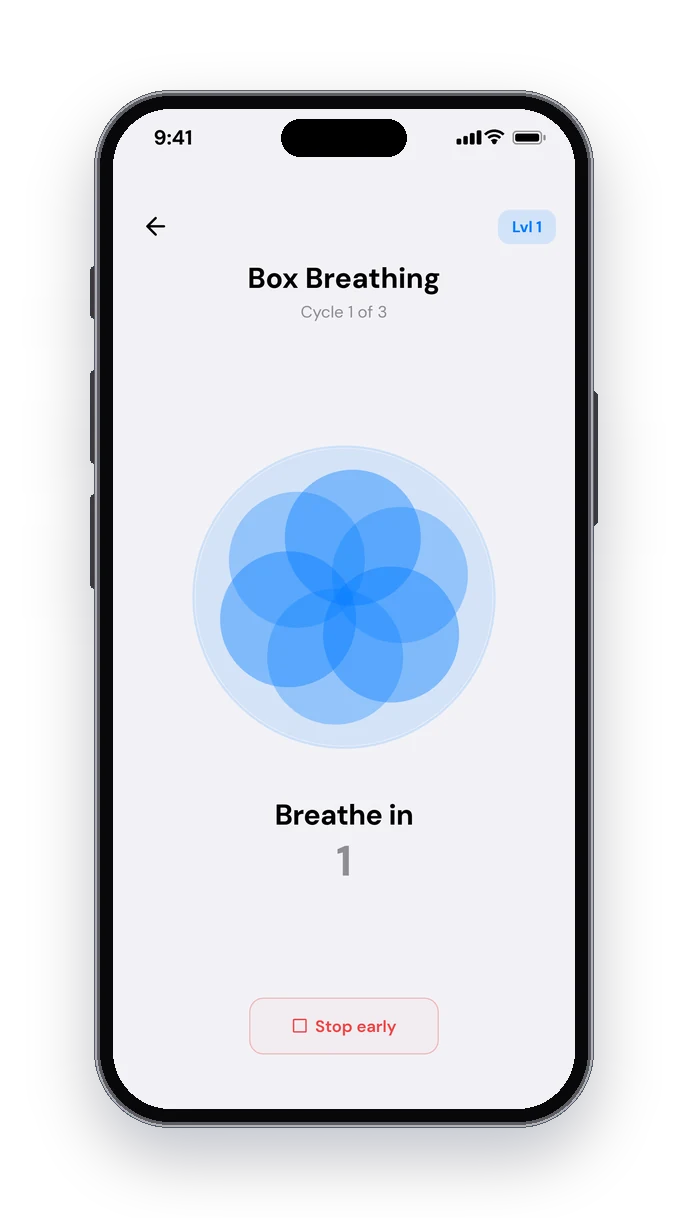
Play freeBreathe with the flower: in, hold, out, hold.
Play freeOne task, one timer, no switching.
Play freeFind every copy of the target word, ignore the rest.
Get the appHow it works
Small, regular practice beats long, rare sessions. Reset is built around that.
 1
Each exercise has 10 levels, and a round fits between classes, meetings or a bus ride.
 2
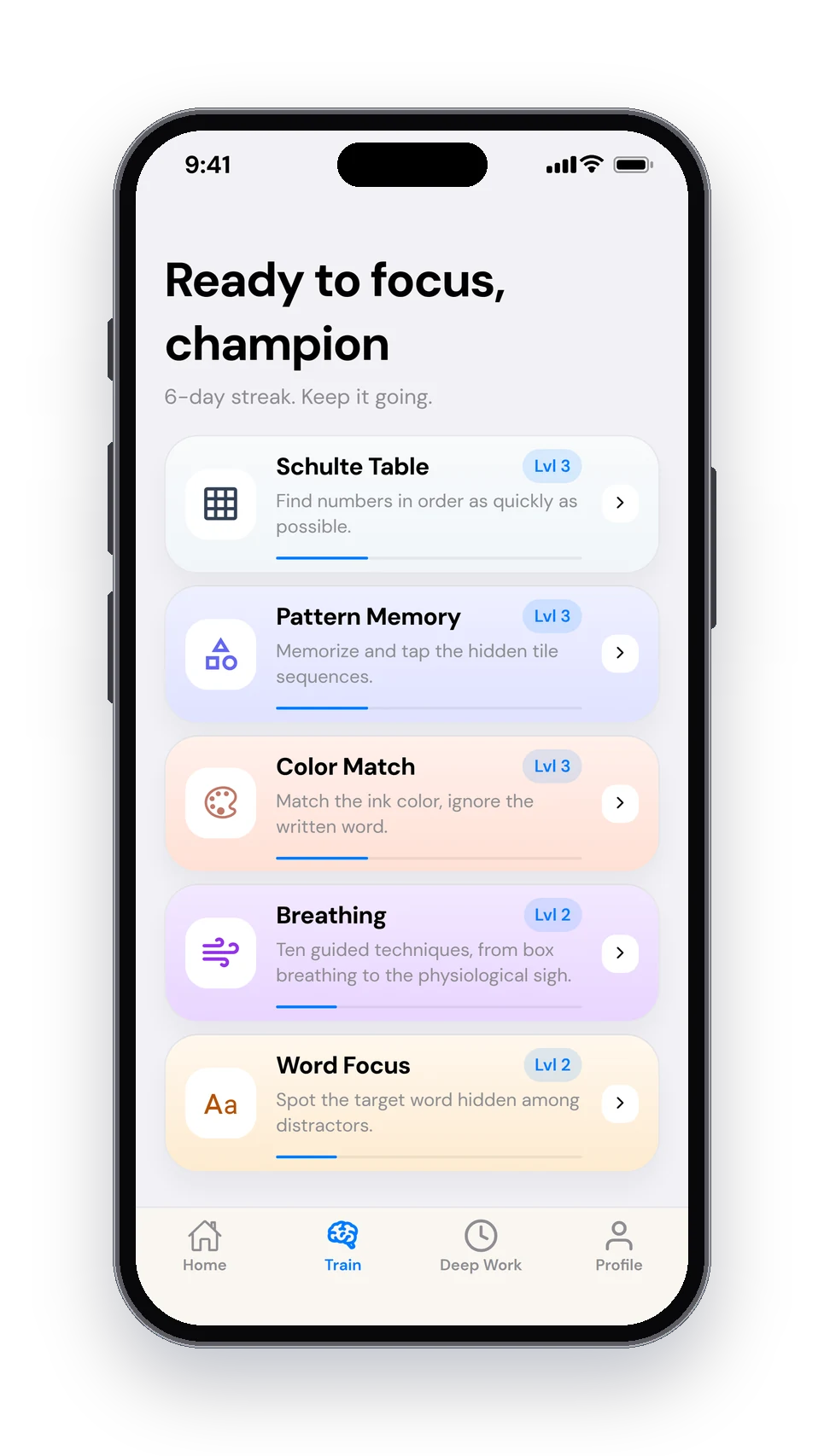
Ten guided techniques, from box breathing to the physiological sigh.
 3
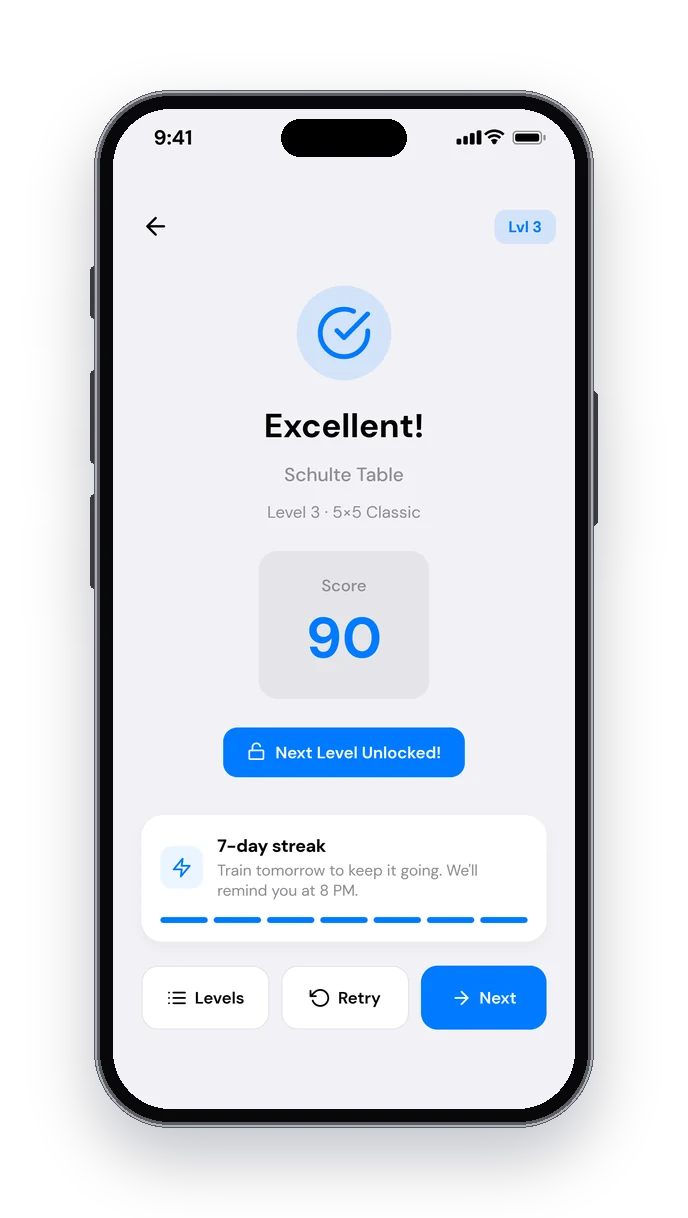
Scores, levels and a daily reminder help five minutes become a habit.
About Reset
Reset is a brain training app for people who want their attention back from endless scrolling. Each exercise is based on a well-studied task from psychology research.
Naming an ink color is slower when the word spells a different color. Color Match trains you to override that pull.
Most people hold about four chunks in mind at once. Pattern Memory works right at that limit.
Breathing slower than about 10 breaths a minute is linked to more relaxation and less anxiety.
Part of your attention stays on the last task after you switch. Deep Work keeps you on one thing.
Free on Google Play. Levels 1 to 3 of every exercise are free, and Deep Work is free for everyone.

Evidence-backed methods to train and improve concentration include:
To achieve deep focus while studying: remove phone notifications completely, set a dedicated 25 to 45 minute Deep Work timer session, complete a 60-second Schulte table exercise before reading to activate saccadic eye movement and prefrontal alertness, and apply active recall rather than passive rereading.
You can rapidly re-engage focus in 2 minutes by combining physiological resets: perform 4 cycles of tactical box breathing (4s inhale, 4s hold, 4s exhale, 4s hold) to stabilize your heart rate variability (HRV), followed by one round of an interactive Schulte table or pattern memory sequence to force neural synchronization.
Frequent focus loss is typically driven by dopamine desensitization from hyper-stimulating short-form video feeds ('brainrot'), chronic multitasking habits, and digital fatigue. When the brain is conditioned to micro-stimuli every 5 to 15 seconds, sustained cognitive tasks trigger boredom and restlessness. Deliberate cognitive training retrains your attention span.
The most effective cognitive training involves targeted, progressive overload across three core faculties: visual processing speed (Schulte tables), working memory capacity (spatial pattern recall), and cognitive inhibition (Stroop effect color tasks). Reset bundles these science-backed modalities into quick 3 to 5 minute daily sessions.
Neuroscientists highlight seven high-impact habits that impair cognitive longevity and daily focus:
Yes. Neuroplasticity research demonstrates that the brain adapts directly to deliberate daily stimulation. Short, consistent training intervals of 5 to 10 minutes per day using working memory and executive control drills yield significantly better cognitive maintenance and attention span gains than sporadic, lengthy sessions.
From a cognitive neurobiology standpoint, the top exercises combine visual-spatial attention (such as Schulte tables), executive impulse suppression (Stroop effect color matching), and cardiovascular oxygenation. Integrating quick mental challenges with controlled breathwork produces rapid gains in neurovascular coupling and working memory.
A Schulte table is a grid of randomly arranged numbers or letters used to train peripheral vision, visual scanning speed, and attention. By finding numbers in sequence without moving your eyes to the center, you train your brain to process information faster and expand your field of focus. Reset's Schulte table exercise is a core brain training tool that improves reading speed, concentration, and eye training.
A deep work timer is a focused session timer based on Cal Newport's concept of deep work, which is the ability to focus without distraction on cognitively demanding tasks. Reset's deep work timer helps you block out intervals of pure, uninterrupted focus, reducing digital distraction and building the sustained attention needed for high-quality cognitive output.
Pattern matching in brain training involves memorizing and recalling sequences of shapes, colors, or positions. In Reset's Pattern Memory exercise, you observe a sequence and reproduce it, training working memory, sequential recall, and spatial cognition. Regular practice improves your brain's ability to retain and process information quickly.
The Stroop effect is a cognitive phenomenon where the brain takes longer to name the ink color of a word when the word names a different color. In Reset's Color Match exercise, this effect is used to train cognitive inhibition, processing speed, and attention control, which are key components of executive function.
Box breathing (4s inhale, 4s hold, 4s exhale, 4s hold) stimulates the vagus nerve and shifts the autonomic nervous system into parasympathetic tone, reducing stress hormones and boosting oxygenation to the prefrontal cortex.
Yes, Reset is free to download on Android via the Google Play Store. All core brain training exercises including Schulte Table, Box Breathing, Pattern Memory, Stroop Color Match, and Deep Work Timer can be played for free up to level 3. A premium tier unlocks all advanced levels and features.