Why is it so hard to stop scrolling at night?
At the end of the day your self-control is lower, and a feed never ends. There is no natural stopping point, so "five more minutes" easily becomes an hour.
How does phone use before bed affect sleep?
In a controlled study, people who read on a light-emitting device before bed took longer to fall asleep, released less melatonin, and felt less alert the next morning than when they read a printed book (Chang and colleagues, 2015). A review of studies in young people also links more evening screen time with later bedtimes and shorter sleep (Hale and Guan, 2015).
It is not only the light. Messages, videos and news keep your mind active when it should be winding down.
A simple wind-down routine
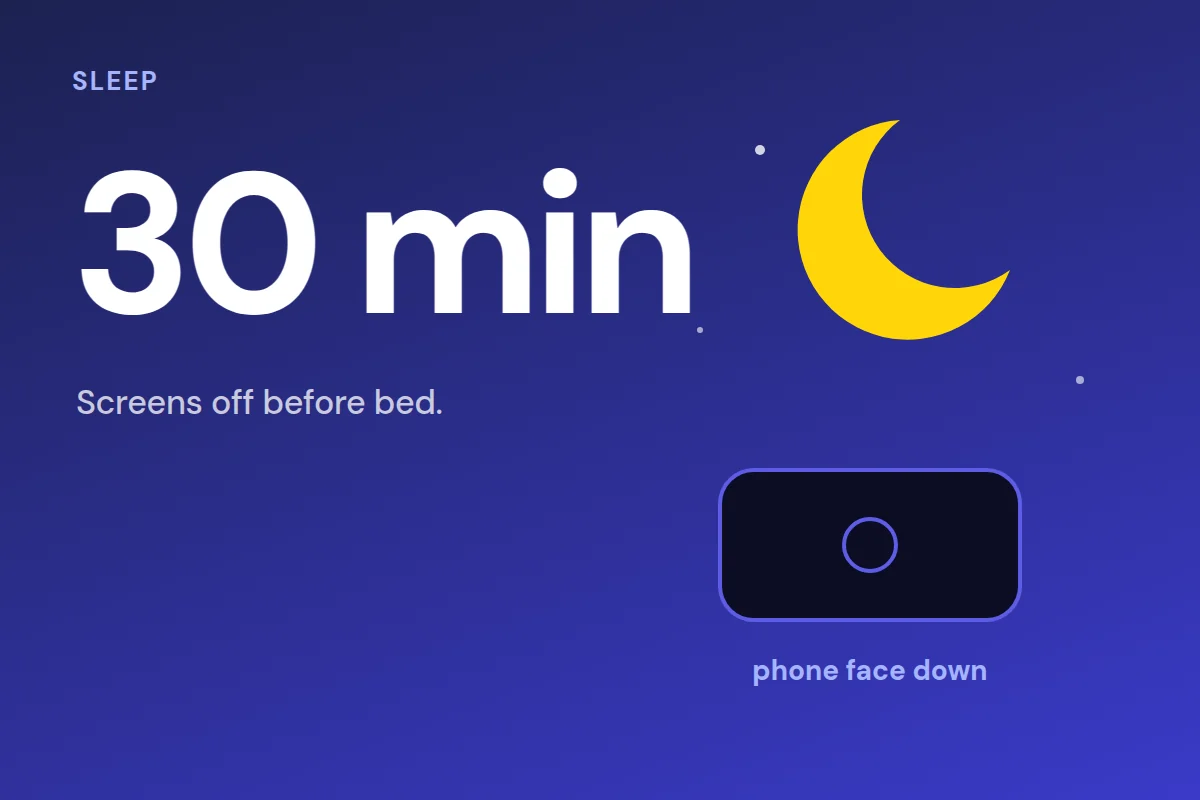
1. Pick a cut-off time. Stop screens 30 to 60 minutes before you plan to sleep.
2. Charge your phone outside the bedroom. Use a cheap alarm clock if you need one. This one change does most of the work.
3. Replace, do not just remove. Read a paper book, stretch or write tomorrow's to-do list.
4. Breathe slowly for a minute or two. Slow breathing is linked to feeling calmer, which makes the switch to sleep easier.
5. Keep it consistent. The same routine at the same time teaches your body when to wind down.