How often does your mind wander?
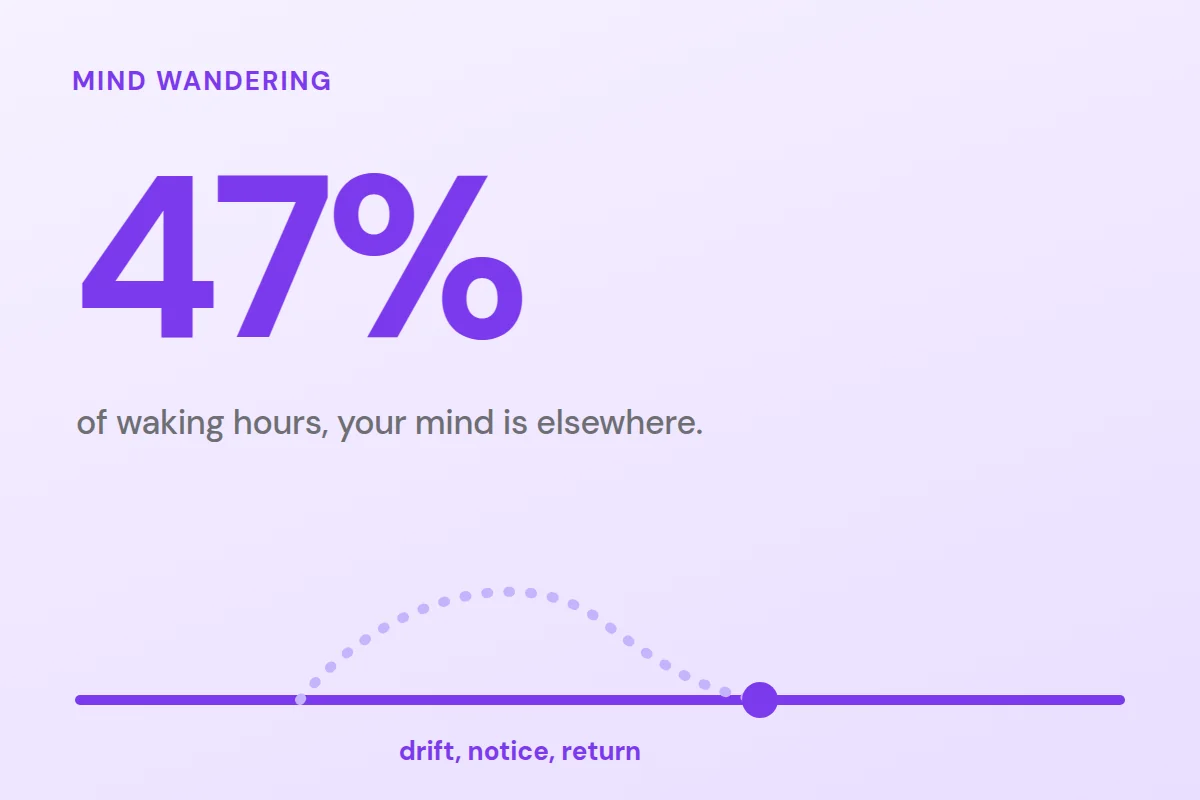
A lot. In a study that pinged thousands of people on their phones during the day, their minds were wandering about 47% of the time, no matter what they were doing (Killingsworth and Gilbert, 2010). If you drift while reading or working, you are completely normal.
Is mind wandering bad?
Not always. Letting your mind roam can help with planning, solving problems and creative ideas (Smallwood and Schooler, 2015). It becomes a problem when you need to take in information: you reach the end of a page and realize you did not read it. In the same 2010 study, people also reported feeling less happy while their minds wandered.
Why does your mind wander?
Tiredness, boredom, stress and a task that is too easy or too hard all make drifting more likely. Constant phone checking also trains your attention to expect something new every few seconds.
How to bring your attention back
1. Notice and name it. Silently say "drifting", then return. Every return is a repetition of the skill.
2. Give the task a clear goal. "Read pages 10 to 15 and write two key points" holds attention better than "study".
3. Use short blocks. 25 minutes is easier to stay with than an open-ended session.
4. Park stray thoughts. Write them down so your mind can let them go.
5. Sleep enough. Tired minds wander more.