What is a physiological sigh?
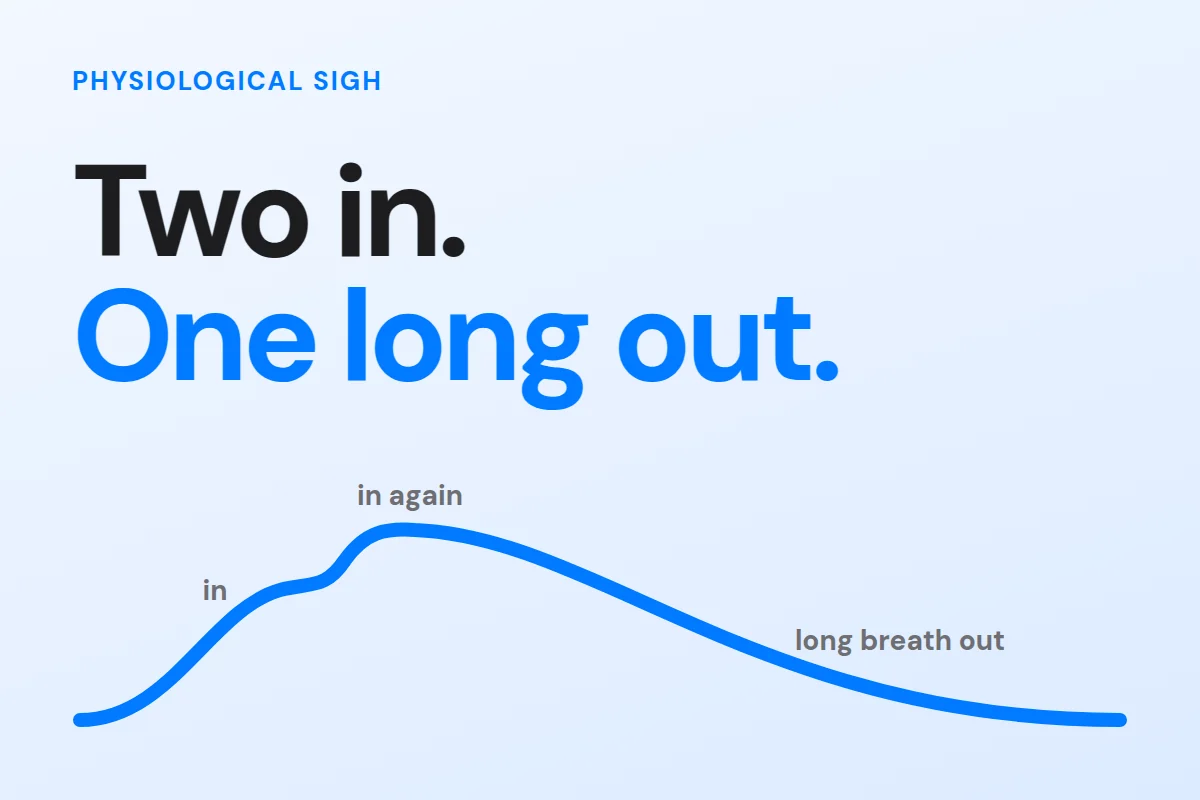
A physiological sigh is a breath with two inhales and one long exhale. You breathe in through your nose, take a second short "top-up" breath, then let it all out slowly. You already do this without thinking: people sigh every few minutes, and the brain has a dedicated circuit for it (Li and colleagues, 2016).
How do you do a physiological sigh?
- Breathe in through your nose until your lungs feel almost full.
- Take a second short breath in through your nose to fill them completely.
- Breathe out slowly through your mouth until your lungs feel empty. Make the exhale longer than both inhales.
One to three sighs can help in a tense moment. For a longer practice, repeat the pattern for a few minutes.
Does the physiological sigh work?
In a 2023 study, people practiced five minutes of breathing a day for a month. The group doing cyclic sighing had the biggest improvement in mood and the largest drop in breathing rate at rest, more than a mindfulness meditation group (Balban and colleagues, 2023). Earlier research also found that sighs act like a "reset" for breathing when we are under mental load (Vlemincx and colleagues, 2013).
When should you use it?
Before an exam or a presentation, after a stressful message, or whenever you notice your breathing has become fast and shallow. It is quick and discreet, so you can do it anywhere.
Is it safe?
For most people, yes. If you feel lightheaded, slow down or return to normal breathing. It is a calming tool, not a treatment for anxiety disorders.