Does brain training work?
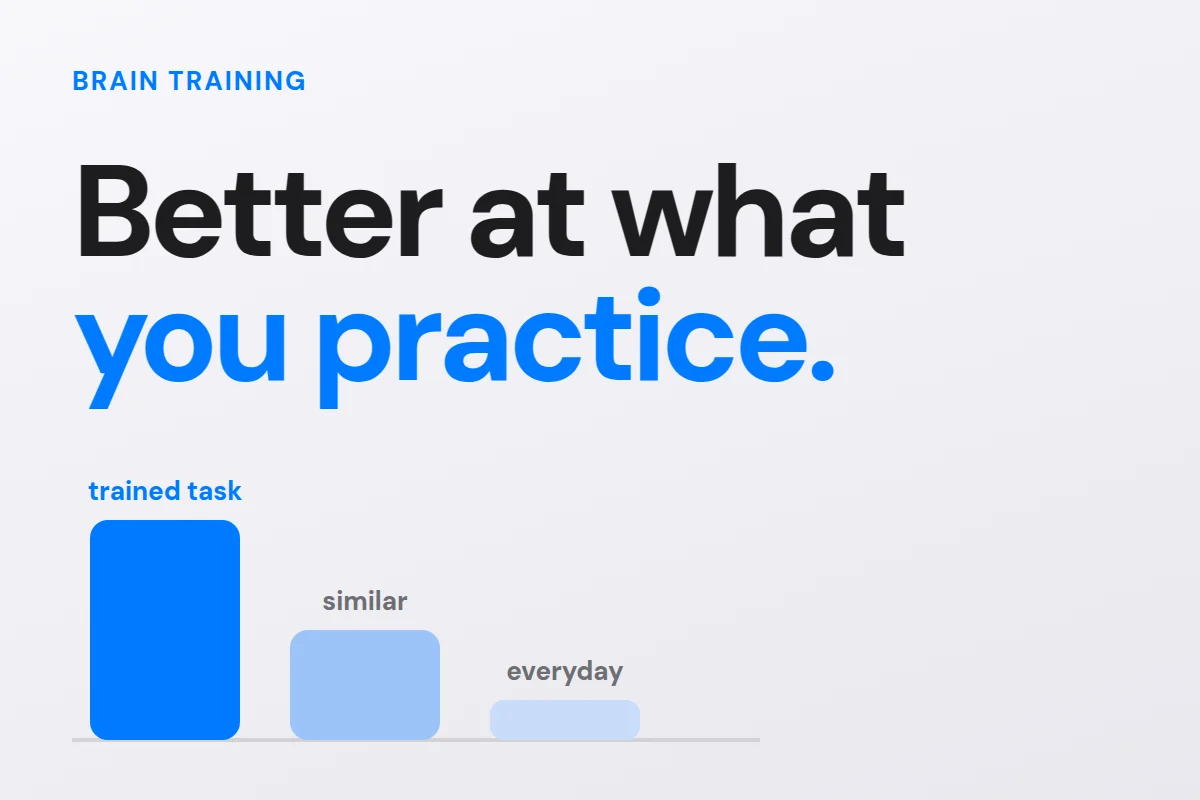
It depends on what you mean by "work". If you practice a memory game, you get better at that game, and usually at very similar tasks. That part is solid. Whether practice spreads to unrelated abilities, like school grades, intelligence or daily memory, is where the evidence gets thin.
What does the research say?
In 2016, a team of psychologists reviewed the studies that brain training companies cited. They found good evidence that training improves the trained tasks, less evidence for closely related tasks, and little evidence for everyday abilities (Simons and colleagues, 2016). A large review of working memory training reached a similar conclusion (Melby-Lervåg and Hulme, 2013).
The same year, the US Federal Trade Commission fined one brain training company for advertising claims it could not support. The lesson for anyone in this space, including us: be honest about what training does.
So is brain training worth it?
Yes, if you use it for the right reasons:
1. As focused practice. A few minutes of a task that needs full attention is real concentration practice, with a score that shows progress.
2. As a daily habit. A short routine is an easy way to start your day or switch into work mode, instead of opening a feed.
3. As a warm-up. Many people use a quick game before studying or deep work.
What has the strongest evidence for a sharper mind?
Sleep, regular physical activity, and protecting your attention from constant interruptions. Brain games are a good companion to those habits, not a replacement.